

Role of SaaS Software Testing in Building Secure Products
Effective SaaS testing isn’t a final step; it’s a continuous loop across your development lifecycle.
Embedding QA in the Requirement and Design Phases
Include test engineers in requirement discussions. This ensures early detection of flaws before coding begins.
Automating Tests During Continuous Integration
Use CI/CD pipelines with software QA testing services to run automated unit, integration, and API tests at every code commit.
Using Staging Environments for Real-World Simulation
Mirror production environments to conduct performance, security, and stress tests before deployment.
Maintaining Regression Suites for Every Release
Automate high-impact workflows to prevent “old bugs” from returning in new releases.
Continuous Monitoring and Feedback Loops Post-Launch
Post-release monitoring helps identify defects early, ensuring ongoing SaaS reliability.
Choosing the Right Software Testing Services for Your Needs
Finding the right software testing services partner or structure defines how efficiently and confidently you can scale your SaaS product.
WT Softech recommends a flexible testing ecosystem that balances manual software testing services and automation-driven QA testing for maximum efficiency.
When to Leverage Manual Software Testing Services
- Manual testing brings creativity, empathy, and context that scripts often miss.
- Ideal for exploratory and usability testing.
- Valuable for UI/UX consistency checks.
- Detects real-world scenarios automation might overlook or miss.
- Critical for first-time user experience validation and early development or MVP stages.
The Power of Automation in Software QA Testing Services
- Ensures faster regression coverage during rapid deployments.
- Enables seamless CI/CD verification before code goes live.
- Supports scalable cross-browser and device testing using cloud platforms.
- Improves test accuracy, repeatability, and reliability.
- Frees QA teams to focus on innovation and process improvement.
Building a Hybrid Testing Model for Maximum Coverage
- Combine manual insight with automation speed.
- Integrate external QA partners for flexibility.
- Automate repetitive flows; manually validate emotional and UX aspects.
- Include security and performance tests in every release.
- Review and refine your testing mix regularly.
How to Improve QA Process for Unshakeable Software Quality
A good QA process evolves continuously, adapting to feedback and growth. Tracking the right metrics helps drive improvement.
Key Metrics for QA Process Improvement
- Track defect escape rate for early bug detection.
- Measure mean time to detect (MTTD) and resolve (MTTR).
- Monitor regression and release stability over time.
- Evaluate test coverage vs. business impact.
- Correlate user-reported bugs with QA team performance for insights.
Practical QA Process Improvement Ideas
- Adopt shift-left testing early in the sprint.
- Implement quality gates in CI/CD pipelines.
- Schedule routine exploratory testing cycles.
- Prioritize bugs by impact on user trust.
- Encourage continuous QA–dev feedback loops.
Implementing Actionable QA Process Improvement Suggestions
- Start with a comprehensive QA audit.
- Define measurable quality gates and enforce them.
- Automate critical user journeys first.
- Integrate load and security testing regularly.
- Review QA metrics after every release cycle.
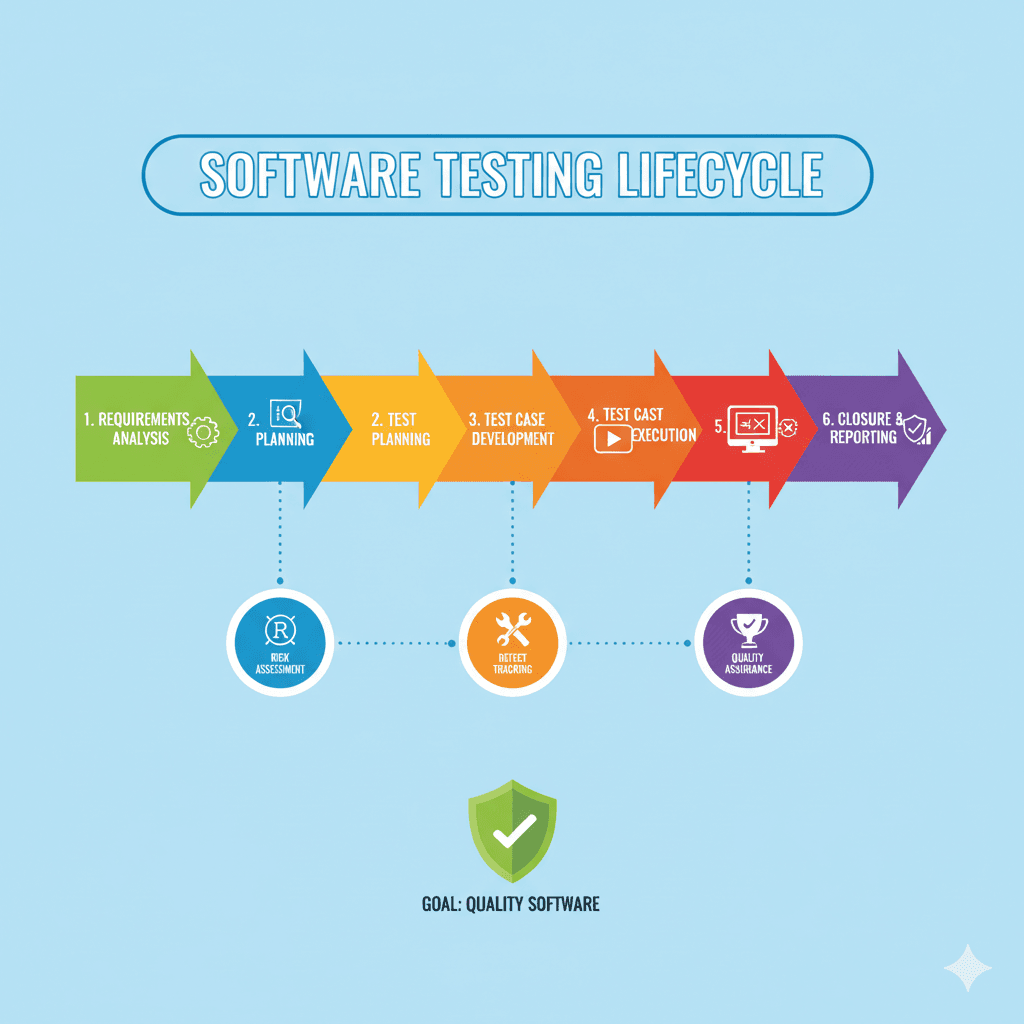
A Proactive Approach to Bug Prevention in Software Testing
Shifting Left: Integrating Bug Prevention Early
- Design features with testability in mind.
- Include QA in code reviews and early planning.
- Automate unit and API testing during development.
- Use feature flags and incremental rollouts.
- Integrate static code analysis into CI pipelines.
Tools and Techniques for Effective Bug Prevention
- Leverage CI/CD tools for automated testing.
- Use cloud-based device/browser testing for global consistency.
- Implement load and performance simulation tools.
- Schedule regular security audits and penetration testing.
- Apply real-user monitoring for post-release performance tracking.
Bringing It All Together: The WT Softech Perspective
At WT Softech, SaaS testing isn’t just about finding bugs—it’s about building confidence. Our QA testing services help businesses prevent defects, streamline delivery, and strengthen customer trust.
- Continuous automation for faster deployment.
- Manual testing for user-centric validation.
- Security and performance audits for risk mitigation.
- Proven QA process improvement frameworks for sustained excellence.
We help SaaS providers build products that are functional, dependable, and scalable.
Final Thoughts.
While bugs may seem small, they can erode user trust. Proactive QA builds reliability—because excellence isn’t just about features, it’s about flawless performnace.
Partner with WT Softech, where testing becomes the engine of your growth. Our manual and automation QA services ensure your SaaS thrives with trust, speed, and user satisfaction.
Frequently Asked Questions
Why is continuous SaaS testing important?
What’s the difference between manual and automated QA testing?
How can teams improve their QA process?
What tools help with proactive bug prevention?
Why partner with WT Softech for QA testing?

Sai Teja
Verified Author | 30 October 2025